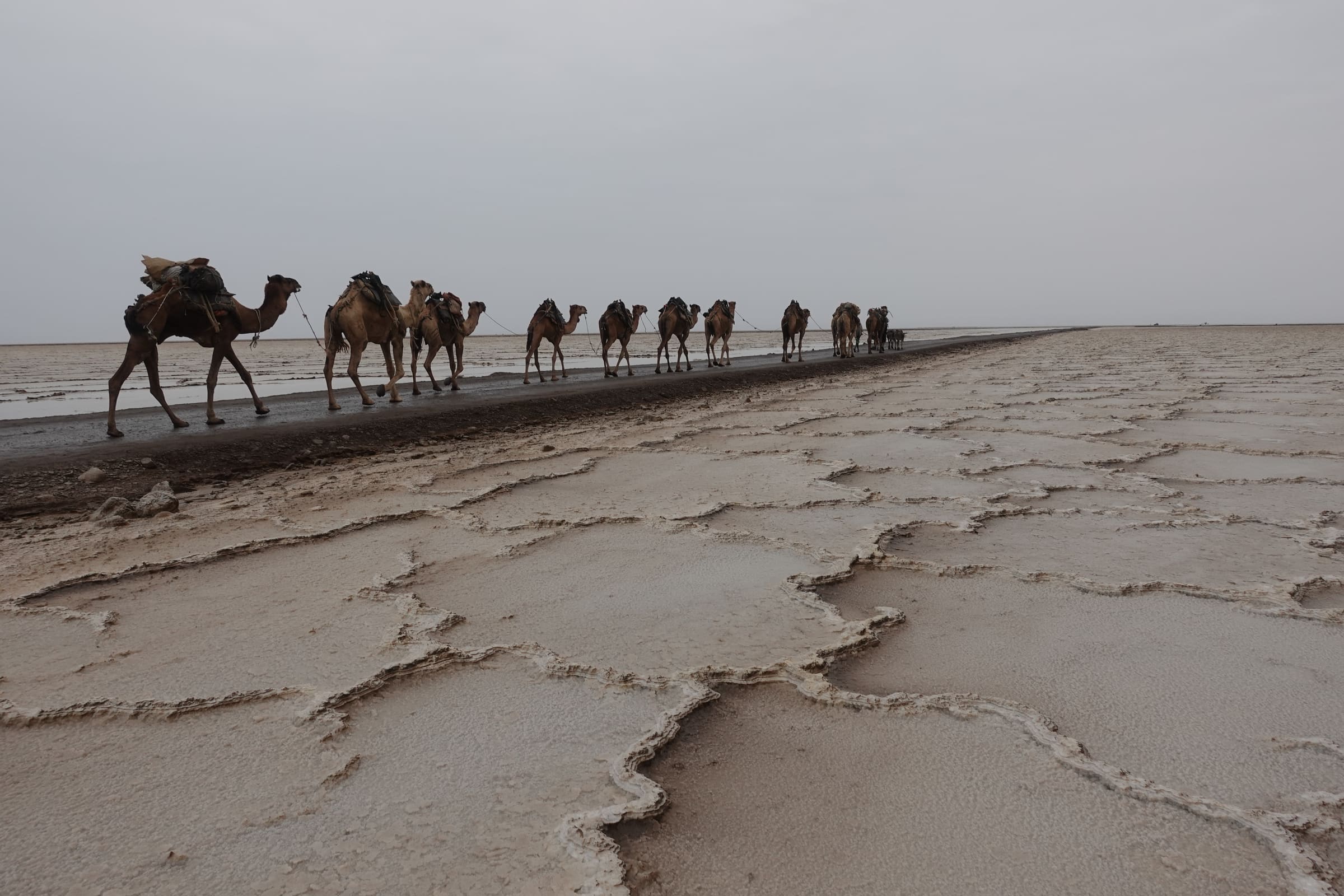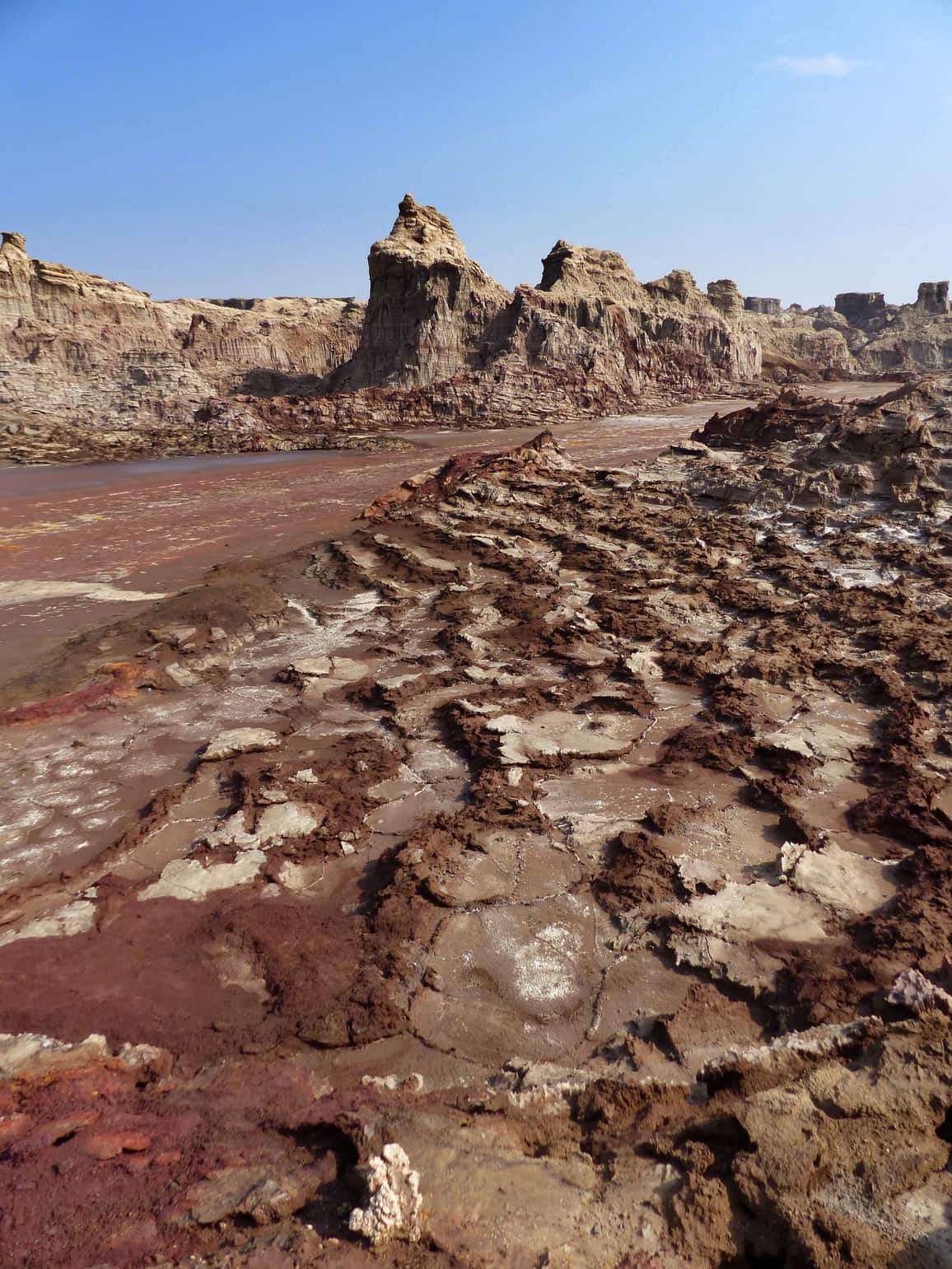
Rainfall barely registers here — under 200 mm a year across most of the depression — so there is no wet season to plan around in the usual sense. What there is instead is a summer so extreme that almost every operator simply stops running. From May to September the salt flats routinely pass 45 °C in the shade, and there is no shade.
The season in one line
November – February
Peak season and the only genuinely comfortable window. Days of 33–40 °C, cool-ish nights at the Erta Ale rim, and the best light for photography. Book ahead — departures fill.
October & March
Shoulder months. Hot but workable, with fewer people and slightly lower prices. March gets progressively harder as the month goes on.
April
The last usable month for most people, and already punishing. Only worth it if your dates are fixed.
May – September
Effectively closed. Temperatures above 45 °C, real risk of heat illness, and very few operators willing to run. Avoid.
Month by month on the salt flats
| Month | Typical daytime high | Verdict |
|---|---|---|
| January | 34–38 °C | Best |
| February | 36–40 °C | Best |
| March | 38–43 °C | Good |
| April | 41–45 °C | Hard going |
| May | 43–48 °C | Avoid |
| June | 45–50 °C | Avoid |
| July | 44–49 °C | Avoid |
| August | 43–48 °C | Avoid |
| September | 41–46 °C | Avoid |
| October | 38–42 °C | Good |
| November | 35–39 °C | Best |
| December | 33–37 °C | Best |
Time of day matters more than month
Whatever month you choose, the itinerary is built around avoiding the middle of the day. Dallol is visited within an hour or two of sunrise; the salt flats are best in the last ninety minutes of light; Erta Ale is climbed after dark. Between roughly 11:00 and 16:00 you are in a vehicle or under a shelter, and that is not laziness on the operator’s part.
What each month is best for
- Erta Ale lava lake: November–February, when a night on the crater rim is bearable.
- Dallol colours: any open month — but at sunrise, when low light saturates the yellows and greens.
- Salt caravans: year-round daily, but easiest to photograph in the cool months at golden hour.
- Mirror reflections on Lake Assale: after the rare rain, most likely around October and March.
- Night skies: December and January — clear, dry and moonless nights are extraordinary.