Skip to content
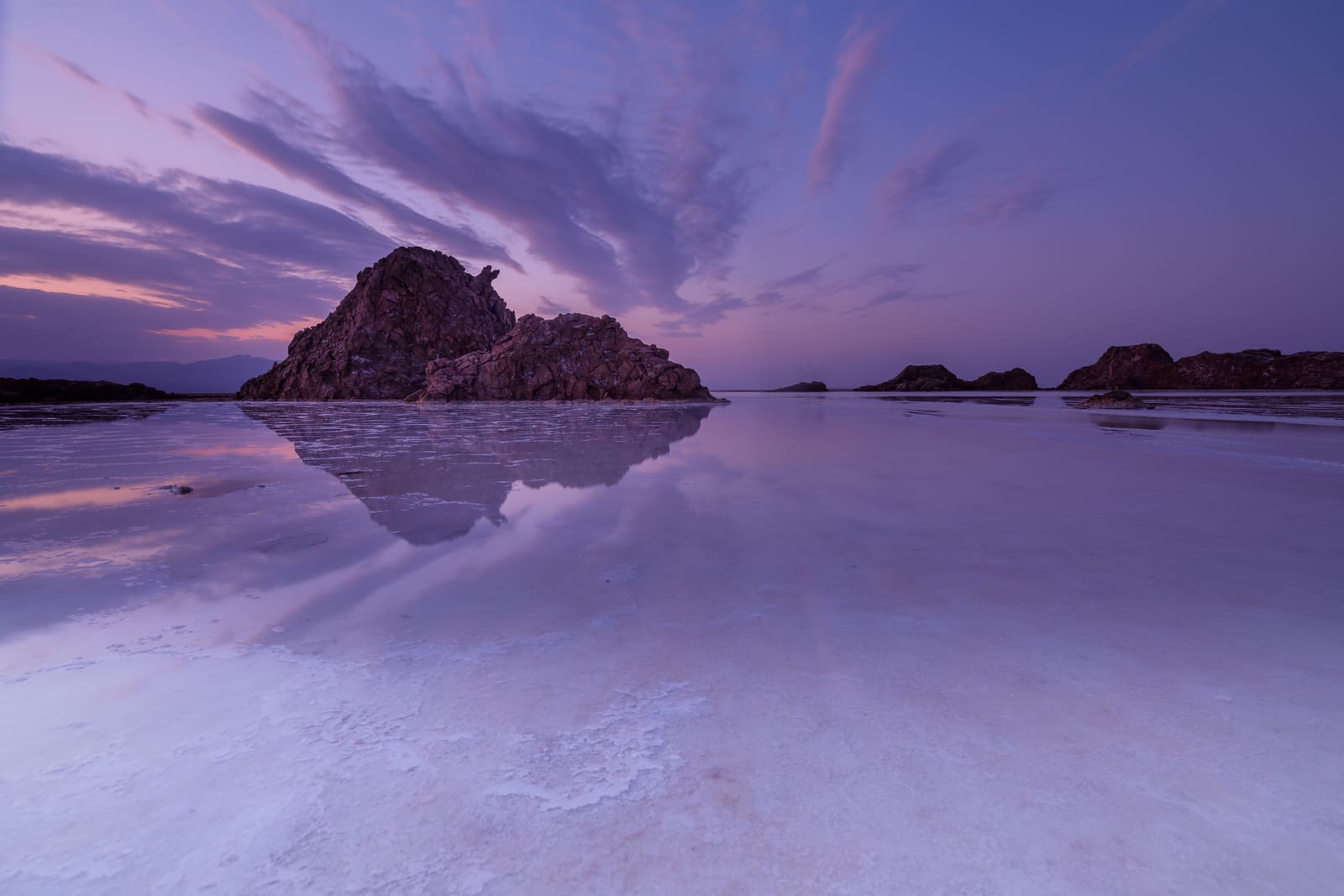
Salt flats of Lake Assale glowing violet at sunset with distant hills

Lake Assale & the Salt Flats

Where salt is still cut by hand · Salt lakes & caravans

Lake Assale — also written Asale, and known locally as Lake Karum — is what remains of a body of Red Sea water that was cut off and evaporated away. Around it lies a salt pan so flat and so white that distance becomes impossible to judge; in the right light the horizon dissolves and the caravans appear to walk on air. A shallow film of brine covers parts of the pan after rain, turning the whole plain into a mirror.

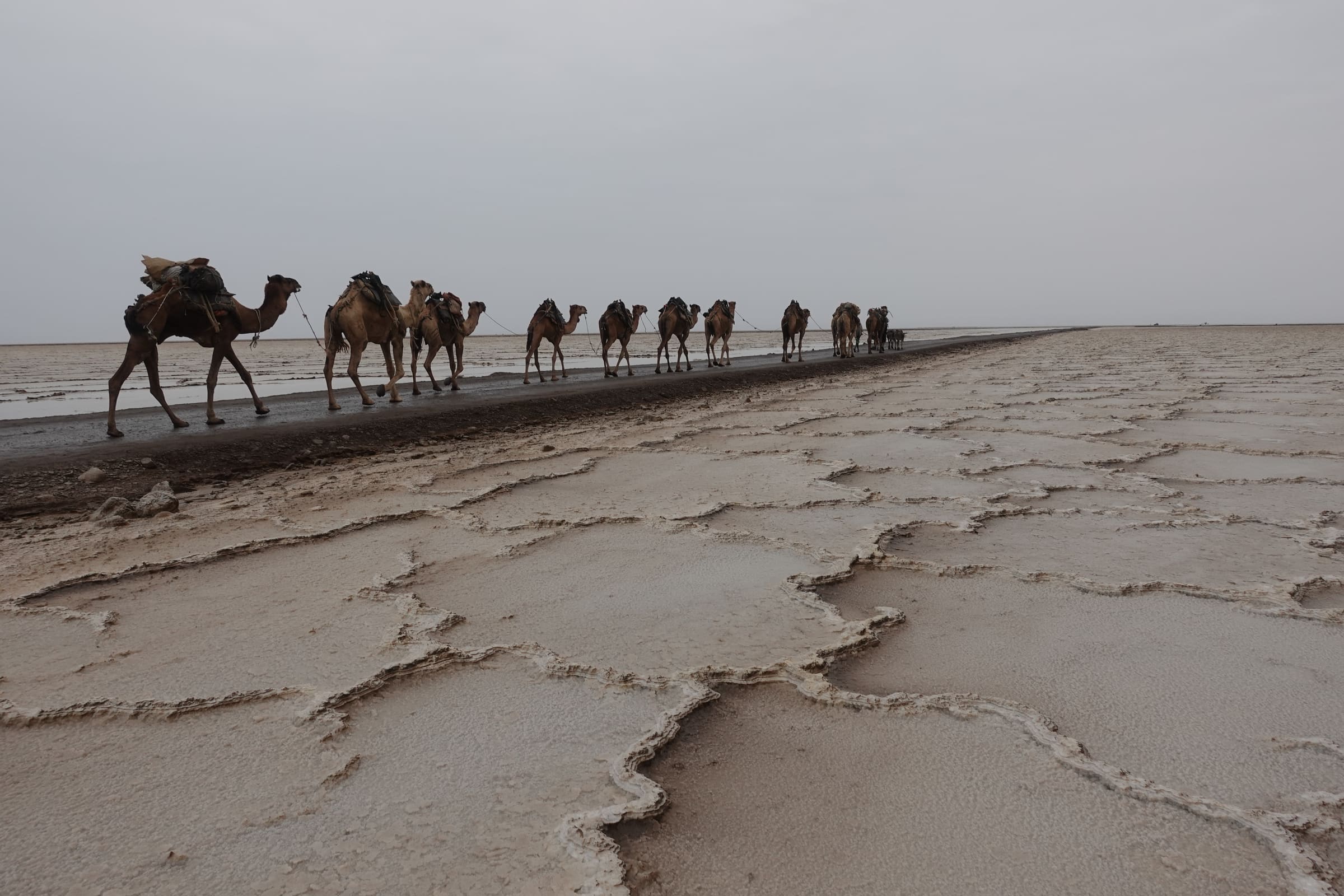
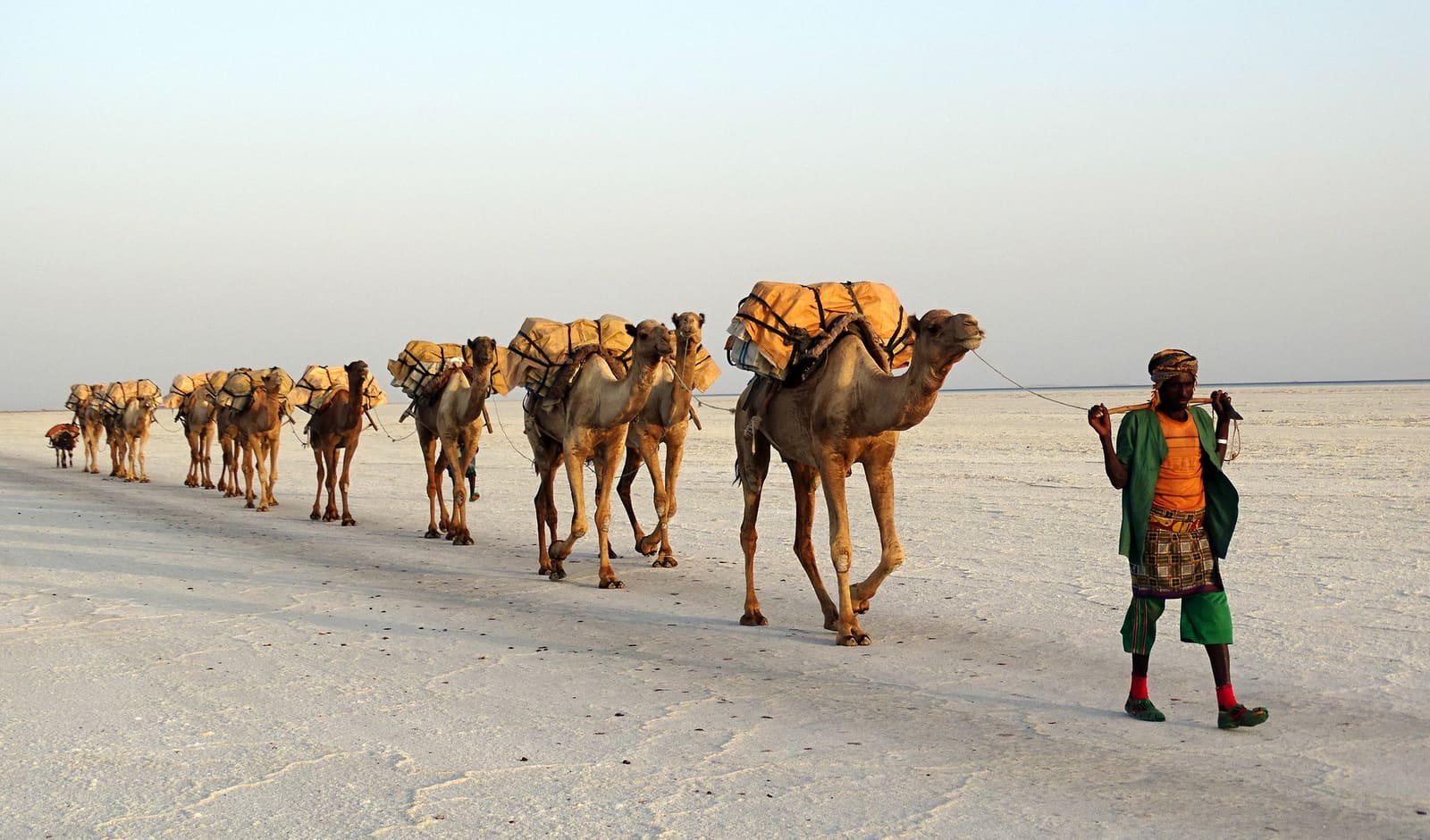
This is also a workplace. Afar and Tigrayan salt cutters break the crust with wooden poles, split it into slabs, and trim each one to a standard size with an axe. The blocks — amole — are lashed onto camels and donkeys and walked up to the highland markets, a trade route that was still Ethiopia’s de facto currency system within living memory. Trucks now take much of the volume, but the caravans have not stopped.

Top things to do at Lake Assale & the Salt Flats

Meet the camel caravans

Late afternoon is when the loaded trains form up for the walk back towards Berhale. Hundreds of camels moving in single file across a white plain is the defining image of the Danakil.

Watch the salt being cut

At Ragad and along the working edge of the pan, teams lever up slabs and shape them by hand, at a pace that has not changed in centuries. Ask before photographing people closely — and expect to tip.

Walk out onto the mirror

When a film of water covers the salt, the reflection is total. Sunset here is one of the great photographic set pieces in Africa.

Float in the brine pools

Warm, intensely saline pools sit near the edge of the flats. You can lie back in them like a deckchair — but rinse afterwards, as the salt crystallises on skin within minutes.

Look for the salt crystal formations

Where evaporation has been slow, the pan grows hexagonal ridges and delicate crystal flowers. They are fragile: walk carefully and leave them where they are.

How to get to Lake Assale & the Salt Flats

  • The base for the salt flats is the settlement of Hamed Ela (Ahmed Ela), a cluster of stick shelters where most groups camp overnight.
  • From Mekelle: about 7–8 hours by 4x4 via Berhale, on the classic Tigray descent.
  • From Semera: reached on day two or three of the standard 3-day loop, usually combined with Dallol the following morning.
Insider tips
  • Sunglasses are not optional. Glare off the salt is severe, and reflected light burns the underside of your nose and chin — sunscreen there too.
  • Go for golden hour. Midday flattens the plain into featureless white; the last ninety minutes of light is when it becomes extraordinary.
  • Carry small notes for tipping if you photograph the salt workers or their animals up close, and always ask first.

Best tours that include Lake Assale & the Salt Flats

These expeditions are the practical way to reach Lake Assale & the Salt Flats — permits, 4x4s, guides and camp logistics are all handled for you:
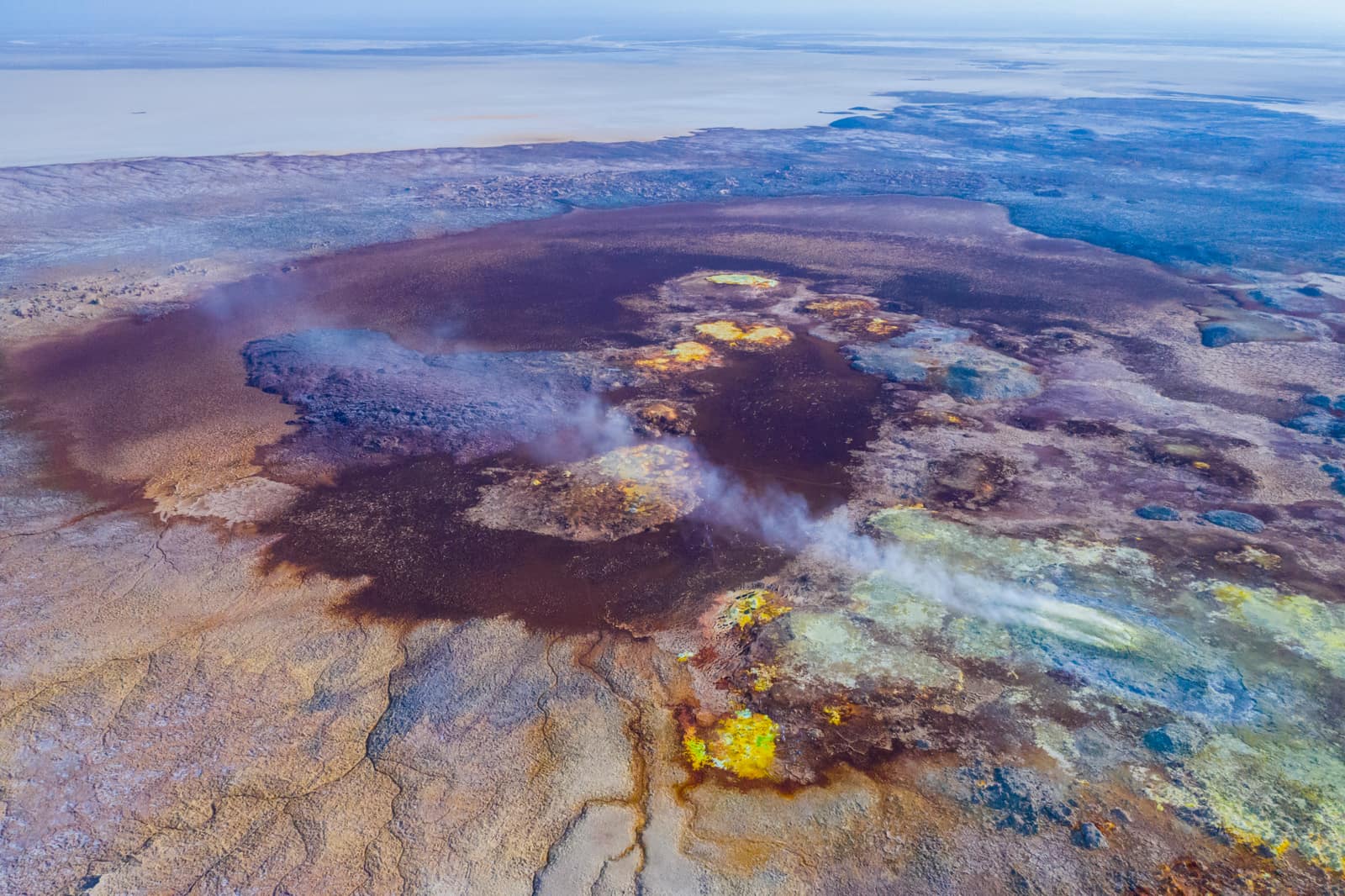
Aerial view of the purple and yellow mineral terraces of Dallol Multi-day expedition from $252
🕒 3 days 📍 From Mekele (Mekelle)

Mekele: Dallol & Danakil Depression Volcano Expedition

The classic Tigray-side circuit at a price that is hard to beat. Three days out of Mekele take in the whole highlight reel: the descent through Berhale, the camel caravans and salt cutters of Lake Assale, the vivid mineral fields at Dallol, and the night trek up Erta Ale to look into a lava lake. Camping is basic — a mattress under the stars — and the heat is real, but this is the Danakil as travellers picture it, with permits, an armed scout, 4x4s, a cook and camp gear all handled.

  • Dallol’s sulphur springs, salt canyons and Lake Assale
  • Erta Ale volcano and one of the world’s few permanent lava lakes
  • Camp in the open at Hamed Ela and on the volcano rim
Camel train loaded with cut salt slabs crossing Lake Assale Multi-day expedition from $450
🕒 3 days 📍 From Semera ⭐ 4.4 (11)

From Semera: Danakil Depression 3-Day Tour

A well-established Semera departure with a relaxed first day: your guide collects you at the airport, breaks the drive at Afdera for a float in the salt lake, and reaches the Erta Ale base camp in time for an unhurried evening. Day two crosses to Hamed Ela for a golden-hour walk out onto the Lake Assale salt flats as the caravans come in. Day three is Dallol — the coloured mountain, the acid ponds and the hand-cut salt trade — before the drive back to Semera airport.

  • Airport pick-up in Semera and a stop to swim at Lake Afdera
  • Overnight camping beside the Erta Ale base camp
  • Sunset over the Lake Assale salt flats with the camel caravans
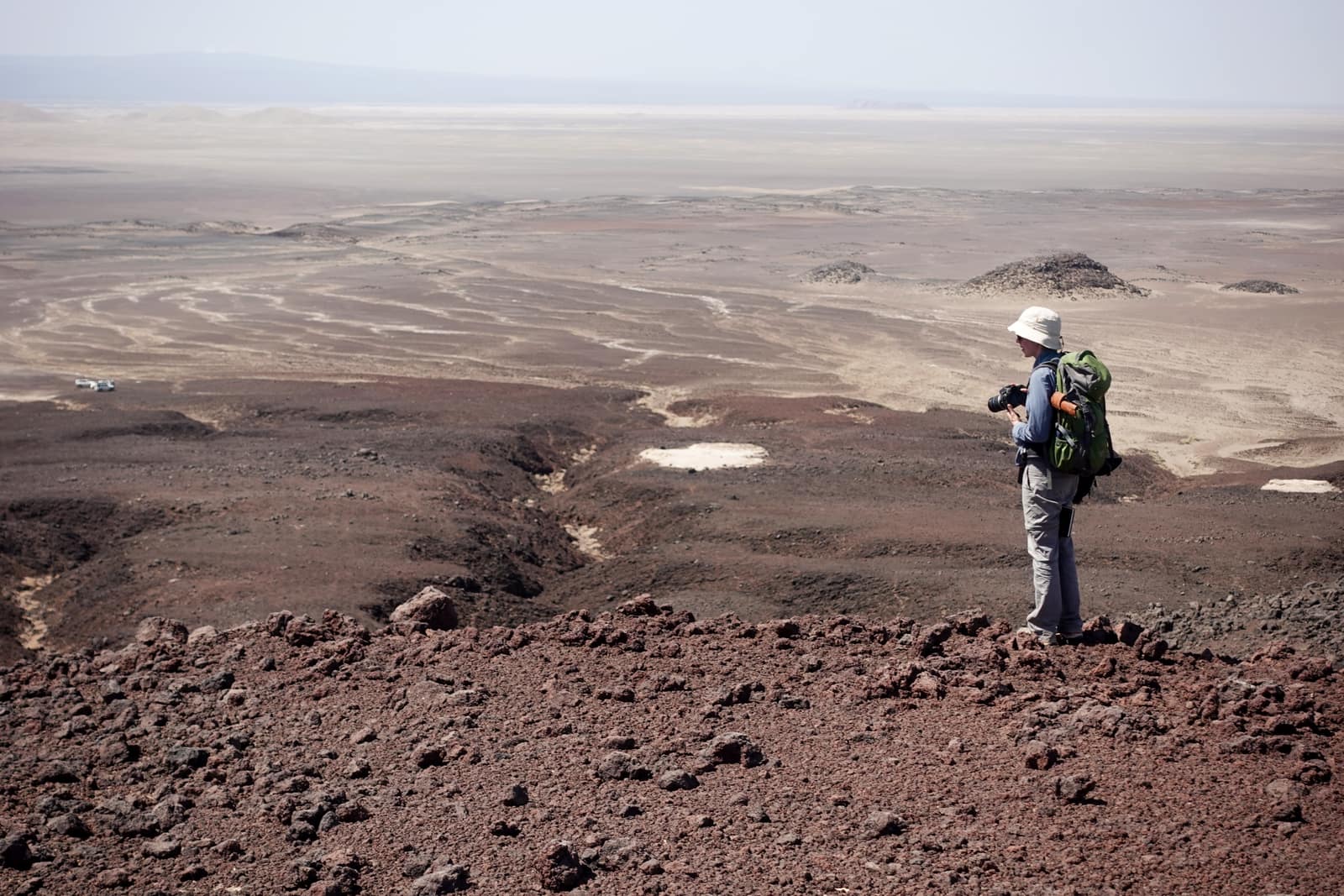
Lone traveller dwarfed by the empty volcanic plain of the Danakil Depression Private tour from $550
🕒 About 36 hours 📍 From Addis Ababa ⭐ 5.0 (1)

From Addis Ababa: Danakil Depression Layover Tour

Ethiopian Airlines routes a very large share of Africa’s traffic through Addis, and this GetYourGuide “Top pick” turns a long connection into the strangest sightseeing stop on the continent. In roughly 36 hours a private guide and vehicle get you down to the salt flats of Lake Asale, out among the camel caravans, and into the buoyant salt water — then back to Bole in time for your onward flight. It is not the cheapest way to see the Danakil, but it may be the only way to see it without adding days to your trip.

  • Built around a long Addis Ababa layover — no extra holiday days needed
  • Lake Asale salt flats and the Afar camel caravans
  • A swim in the salt lake, where you float without trying
Plan your Danakil expedition

Stand on the hottest place on Earth

A permanent lava lake, acid springs the colour of antifreeze and camel caravans crossing a sea of salt — all 125 m below sea level. Compare licensed operators and lock in your dates in a couple of taps.

Good to know

Lake Assale & the Salt Flats FAQs

Frequently asked questions

Can you still see camel caravans at Lake Assale?

Yes. Trucks have taken over a share of the transport since the road improved, but camel and donkey caravans still form daily and remain the classic sight of the salt flats — most often in the late afternoon.

Can you swim in the salt lake?

You can float in the shallow brine pools near the edge, which is a standard stop on most itineraries. It is buoyant rather than refreshing, and you will want a freshwater rinse afterwards — bring a small towel and a spare bottle.

How hot does it get on the salt flats?

Daytime highs of 45 °C are routine in the cooler months and considerably higher from May to September, when almost no tours run. The white surface reflects heat back at you, so it feels hotter than the air temperature suggests.