Skip to content
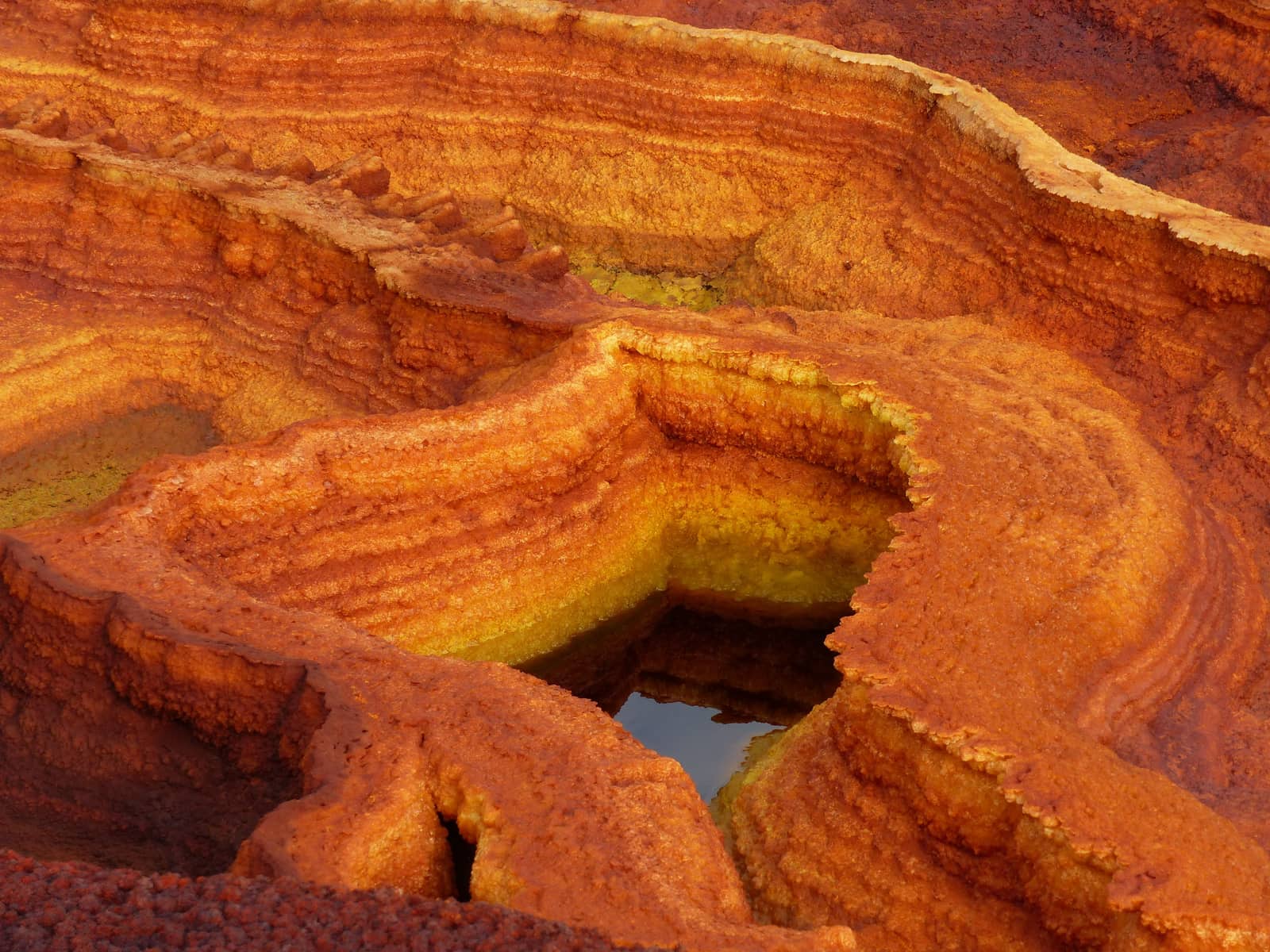
Yellow and orange mineral terraces around green acid pools at Dallol

Dallol

Neon acid springs at –125 m · Volcanoes & geothermal

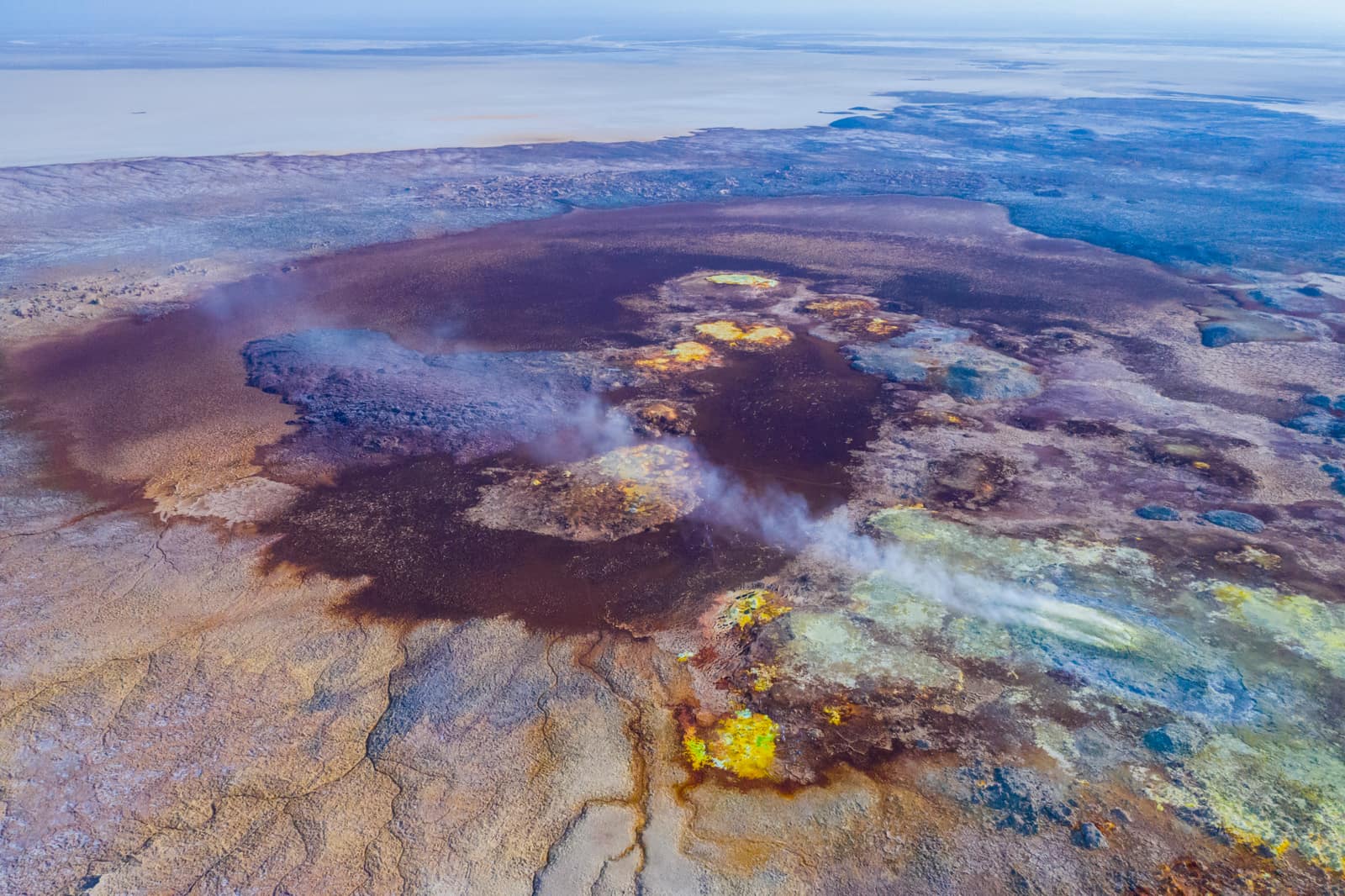
Dallol is the strangest-looking place in Ethiopia, and arguably on the continent. A shallow volcanic crater sits on top of a buried salt deposit hundreds of metres thick; groundwater heated by magma below dissolves that salt, rises, and evaporates instantly at the surface. What it leaves behind is a growing crust of potassium salts, sulphur, iron oxides and other minerals in yellows, acid greens, rust reds and chalk whites, dotted with bubbling springs so acidic they measure close to pH 0.

It also holds a genuine climate record: with a mean annual temperature around 34–35 °C, Dallol is the hottest inhabited place on Earth measured by annual average. The site sits about 125 m below sea level, near the lowest point of the African landmass. Visits are short by necessity — an hour or two soon after sunrise, before the ground becomes unbearable and the colours flatten in the hard midday light.

Top things to do at Dallol

Walk the mineral terraces at sunrise

This is the money shot: low sun raking across yellow potash domes, green pools and orange rims. Groups arrive early both for the light and because the surface heat becomes punishing within a couple of hours.

See the acid springs and geysers

Small vents push out hot, hyper-acidic brine that builds delicate egg-shaped and cauliflower formations. Stay on the paths your guide chooses — the crust is thin in places and the liquid will destroy skin and camera gear alike.

Explore the salt canyons

A short drive away, wind and rare rain have carved the salt beds into pinnacles, mushrooms and slot canyons of grey-white rock. Excellent for photographs and a complete change of texture from the coloured springs.

Visit the ruins of the potash works

Rusting rails and collapsed buildings mark British and later Italian attempts to mine potash here in the early 20th century. The remains are a good measure of just how hostile this ground is to any human plan.

Add the “Black Mountain” and Yellow Lake

Most itineraries pair Dallol with nearby sites: dark, oil-slicked pools and a sulphurous yellow lake that look like nowhere else on the planet.

How to get to Dallol

  • Dallol is always visited as part of a Danakil tour, usually on the same day as the Lake Assale salt flats, from a camp at Hamed Ela about 20–30 minutes away.
  • From Mekelle: about 7–9 hours of driving via Berhale, descending from 2,250 m to below sea level.
  • From Semera: reached on the northern loop of most 3-day itineraries, often on the final morning before the drive back to the airport.
Insider tips
  • Cover up rather than strip down: a long-sleeved light shirt, a hat and a scarf work far better than sunscreen alone at 45 °C.
  • The acid ruins shoes. Wear boots you do not care about, and keep camera bags off the ground — the crust corrodes anything left on it.
  • Do not touch the pools or the crust, and never taste anything. Some springs are close to pH 0 and the ground can be hollow beneath a thin salt shell.

Best tours that include Dallol

These expeditions are the practical way to reach Dallol — permits, 4x4s, guides and camp logistics are all handled for you:
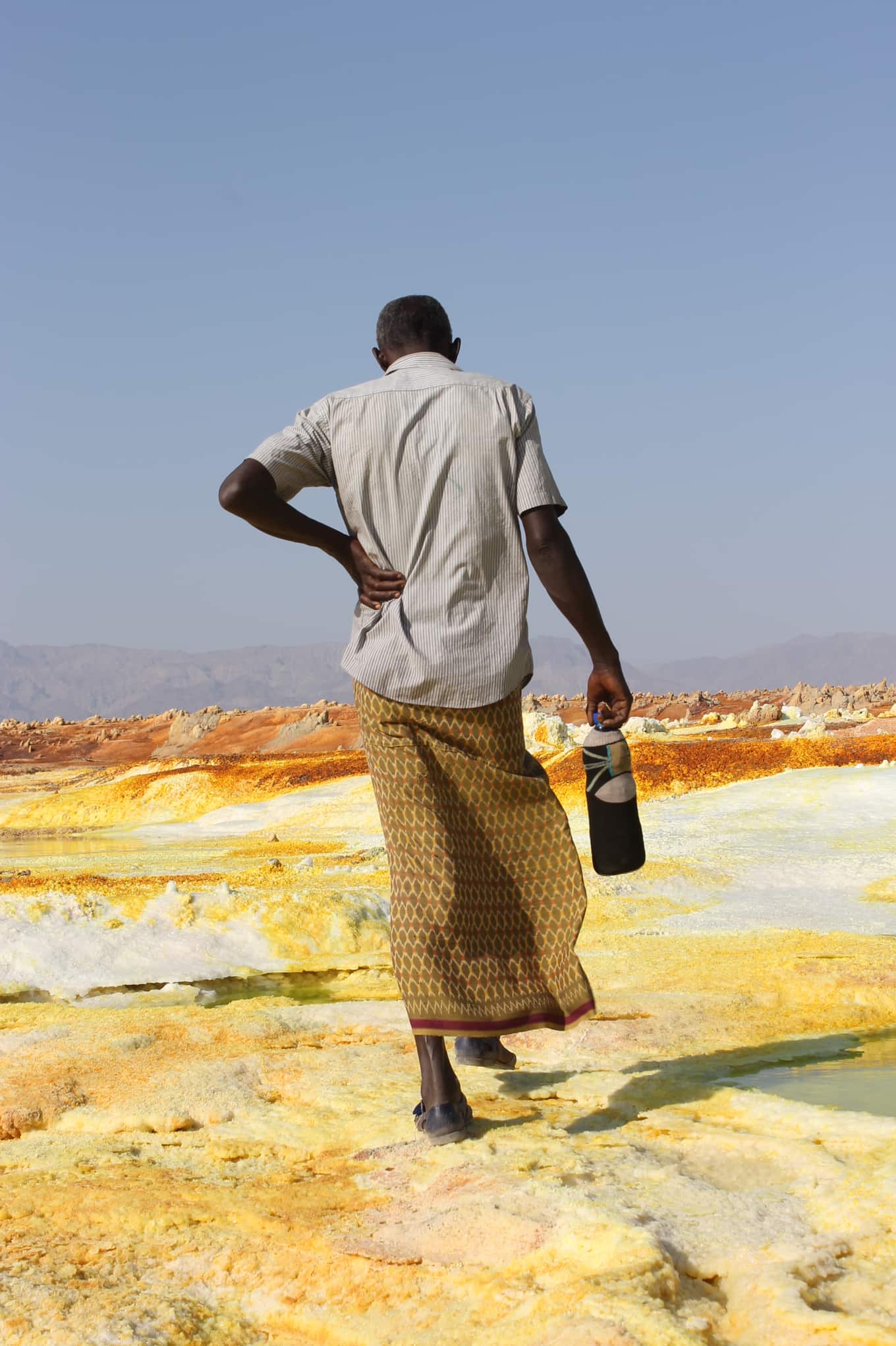
Guide standing on the yellow sulphur crust of the Dallol hydrothermal field Day trip from $187
🕒 Full day 📍 From Mekele (Mekelle)

Mekele: Guided Dallol & Danakil Depression Tour with Lunch

If you only have one day and no appetite for a night on a volcano, this is the trip. A 4x4 drops from Mekele through Berhale and down into the depression, reaching Dallol’s acid springs and salt pinnacles — the lowest point in Africa — before climbing back to the cool highlands the same evening. You still see the headline sight (the yellow-green mineral fields) and the salt-mining plain, but you sleep in a hotel bed. It is also by far the least expensive Danakil product on the market.

  • The cheapest way to reach Dallol — no camping required
  • Descend from the Tigray highlands to 125 m below sea level
  • Neon sulphur springs, salt canyons and potash formations
Aerial view of the purple and yellow mineral terraces of Dallol Multi-day expedition from $252
🕒 3 days 📍 From Mekele (Mekelle)

Mekele: Dallol & Danakil Depression Volcano Expedition

The classic Tigray-side circuit at a price that is hard to beat. Three days out of Mekele take in the whole highlight reel: the descent through Berhale, the camel caravans and salt cutters of Lake Assale, the vivid mineral fields at Dallol, and the night trek up Erta Ale to look into a lava lake. Camping is basic — a mattress under the stars — and the heat is real, but this is the Danakil as travellers picture it, with permits, an armed scout, 4x4s, a cook and camp gear all handled.

  • Dallol’s sulphur springs, salt canyons and Lake Assale
  • Erta Ale volcano and one of the world’s few permanent lava lakes
  • Camp in the open at Hamed Ela and on the volcano rim
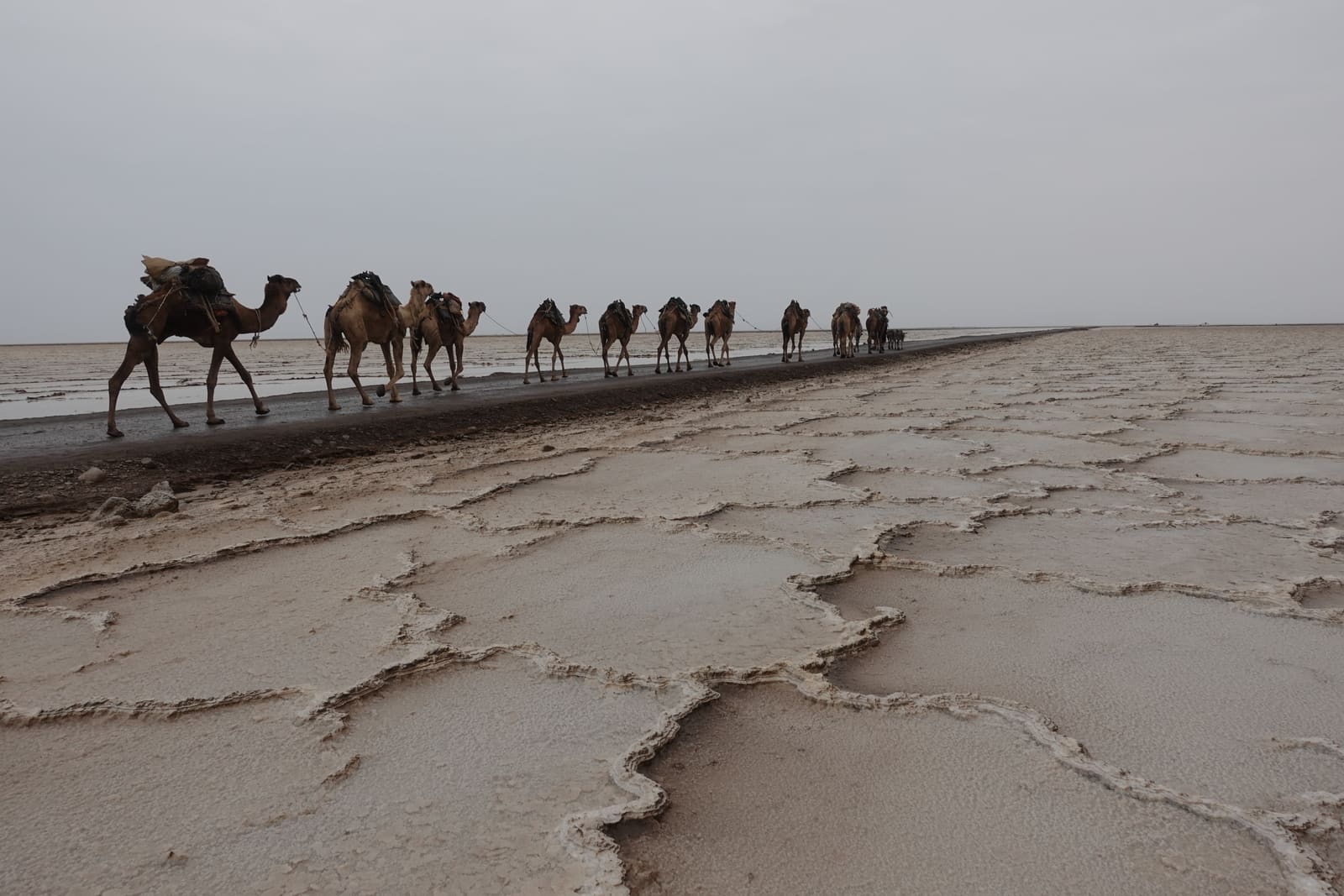
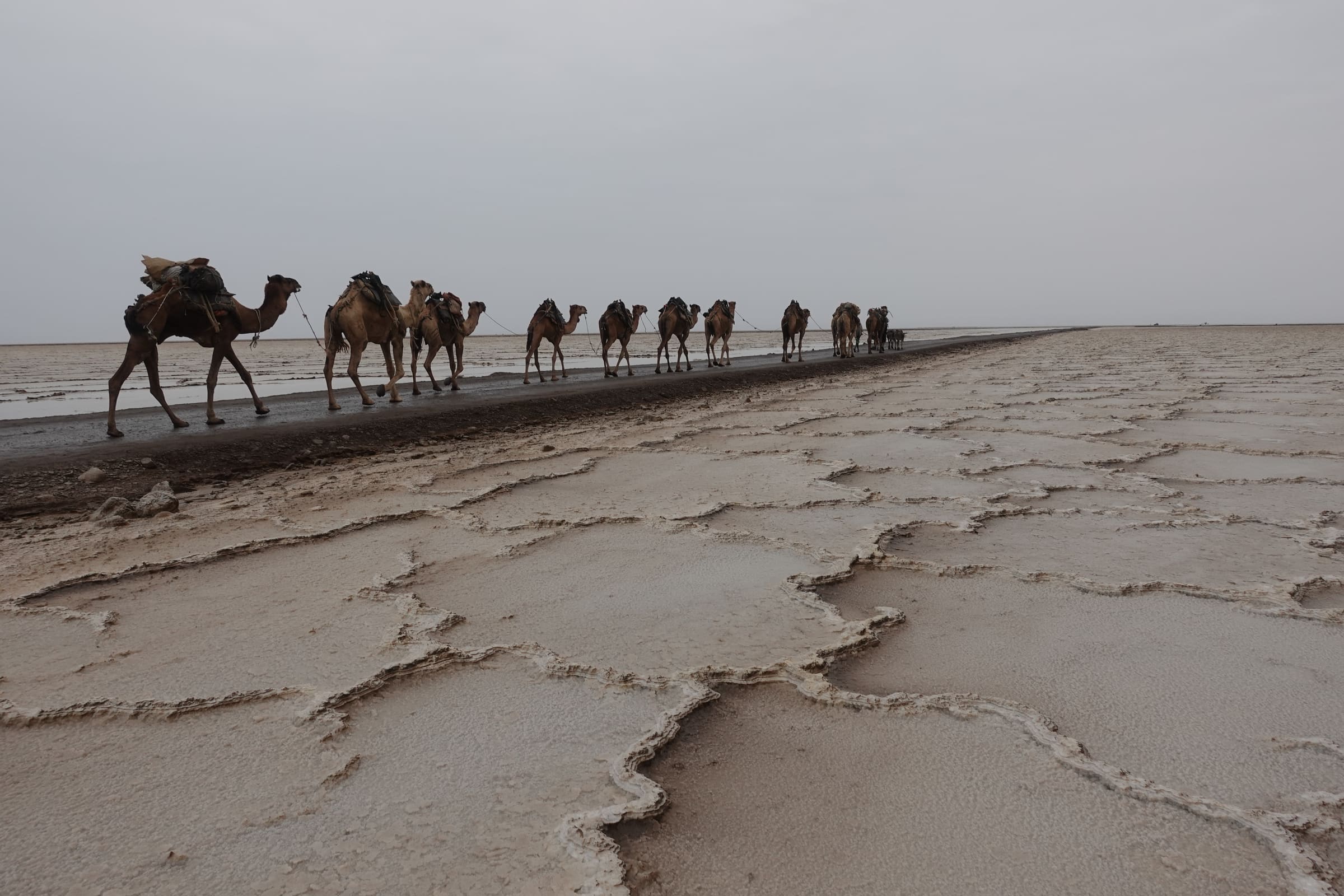
Camel caravan crossing the cracked salt crust of Lake Assale at dawn Multi-day expedition from $421
🕒 3 days 📍 From Semera

Semera to the Edge of Earth: 3-Day Danakil Extreme Adventure

A GetYourGuide “Top pick” and one of the best-paced Danakil itineraries going. Running from Semera — the Afar regional capital, an hour’s flight from Addis — it front-loads the good stuff: an early start to catch Dallol at sunrise when the yellows and greens are at their most saturated, an afternoon float in Lake Afrera’s buoyant water (the local answer to the Dead Sea), and nights in desert camps far from any light pollution.

  • Sunrise at Dallol, before the heat and the crowds
  • Float in the hyper-saline waters of Lake Afrera
  • Colourful geothermal fields, salt canyons and lava plains
Plan your Danakil expedition

Stand on the hottest place on Earth

A permanent lava lake, acid springs the colour of antifreeze and camel caravans crossing a sea of salt — all 125 m below sea level. Compare licensed operators and lock in your dates in a couple of taps.

Good to know

Dallol FAQs

Frequently asked questions

Why is Dallol so colourful?

Hot, salty groundwater rises through a buried salt dome, carrying dissolved iron, sulphur, potassium and other minerals. As it hits the surface it evaporates and oxidises, depositing sulphur yellows, iron reds and copper-toned greens in layers that shift from month to month.

Is Dallol really the hottest place on Earth?

By annual average temperature, yes — recorded means for the settlement of Dallol run around 34–35 °C, the highest for any inhabited place. Single-day records elsewhere (Death Valley, for example) are higher, but nowhere else is this hot year-round.

How long do you spend at Dallol?

Typically 1–2 hours, in the early morning. That is not stinginess on the operator’s part: by mid-morning the reflected heat off the salt makes walking genuinely dangerous, and the flat overhead light kills the colours.